
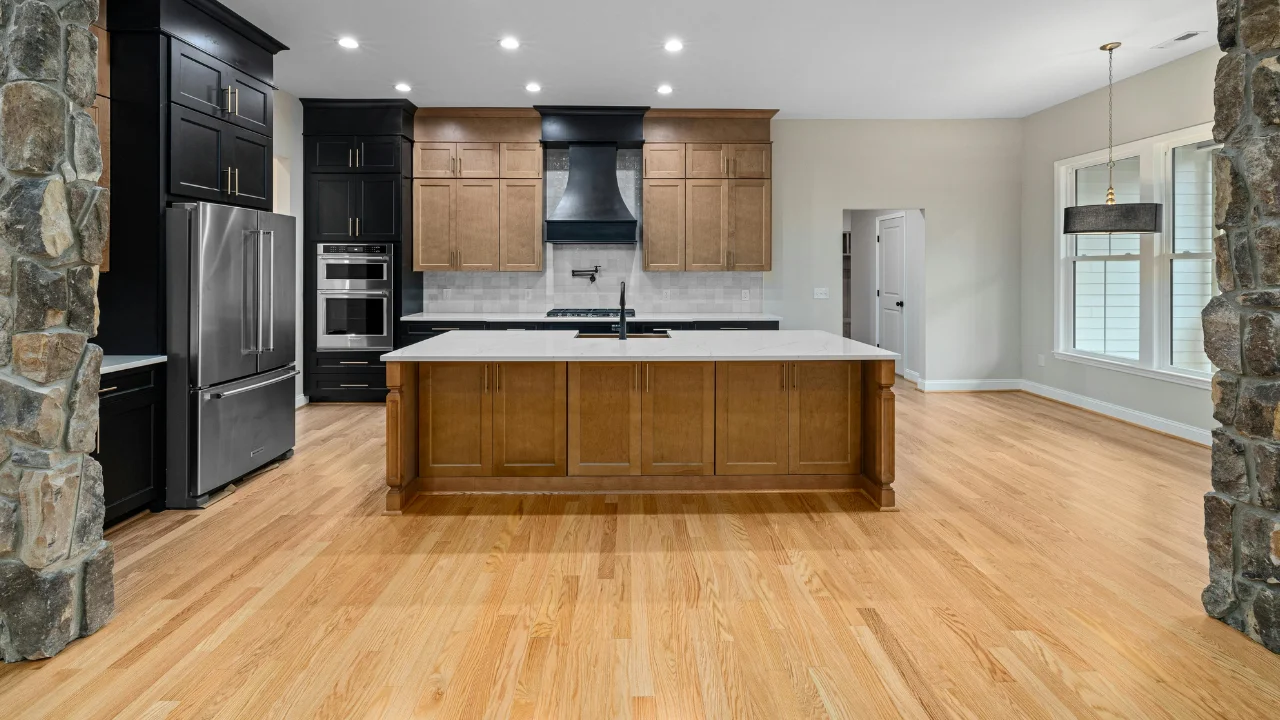
People spend weeks on colour and ten minutes on the specification that will actually determine how the floor performs. That is understandable — colour is the part you look at every day. It is also the part that cannot be changed later without starting again, which makes it worth getting right rather than getting quickly.
The wood decides as much as the colour does
On a stained floor, the pigment is carried into open wood grain, and how much it takes up depends entirely on the species underneath.
Red oak has open grain and a warm, slightly pink base, so it takes stain readily and pushes colours warmer. White oak is tighter grained and cooler, so the same stain lands greyer and less orange. Maple is dense and closed-grain, resists stain and blotches easily unless conditioned first.
That is why a colour named on a card tells you very little. The only reliable preview is that colour, on your wood, in your room.
Showroom light flatters everything
Showroom lighting is designed to make materials look good, and it does. The same board looks different against your trim, under your windows and next to cabinets you are keeping.
A tone that reads warm and rich on a display wall can read orange in a north-facing room. A grey that looked contemporary can go flat under warm bulbs. This is the single most common reason people are disappointed by a floor they were certain about.
Take samples home, put them in the actual room, and look at them at different times of day. Coulee Region light changes character considerably between a bright winter morning off snow and a low summer evening.
Practical consequences people underestimate
- Very dark floors show dust, pet hair and every footprint far more than mid tones.
- Very light floors hide dust well and show scratches and dents more.
- Mid tones with visible grain variation hide daily life better than anything else.
- High gloss displays every fine scratch; matte and satin scatter light and hide wear.
That last one matters more than most people expect. Two identical floors in different sheens look very different after a year with a dog, and it costs nothing to choose the more forgiving one.
Natural is a legitimate answer
Not every floor needs stain. A clear finish over natural wood shows the species for what it is, and on good white oak that is frequently the better-looking result.
It is also the most forgiving choice long term. A natural floor does not date the way a strongly coloured one can, and future repairs blend more easily because there is no colour to match.
Matching floors you are keeping
If new work has to sit alongside an existing floor, know up front that an exact match is unlikely. Your existing floor has aged and changed colour with light exposure, so brand-new material in the same species will not match on day one.
We sample against the actual floor rather than working from a product name, and sometimes the honest recommendation is a deliberate contrast — a different floor that clearly belongs — rather than a near-miss that reads as a mistake.
Where each floor stops is the other half of the same decision, and where one floor should stop and the next should start covers it. This is most of what our design and selection help actually consists of: narrowing the wall down to two or three real candidates, and testing colour where it matters. Our guide to choosing flooring covers the material decision that comes first.