
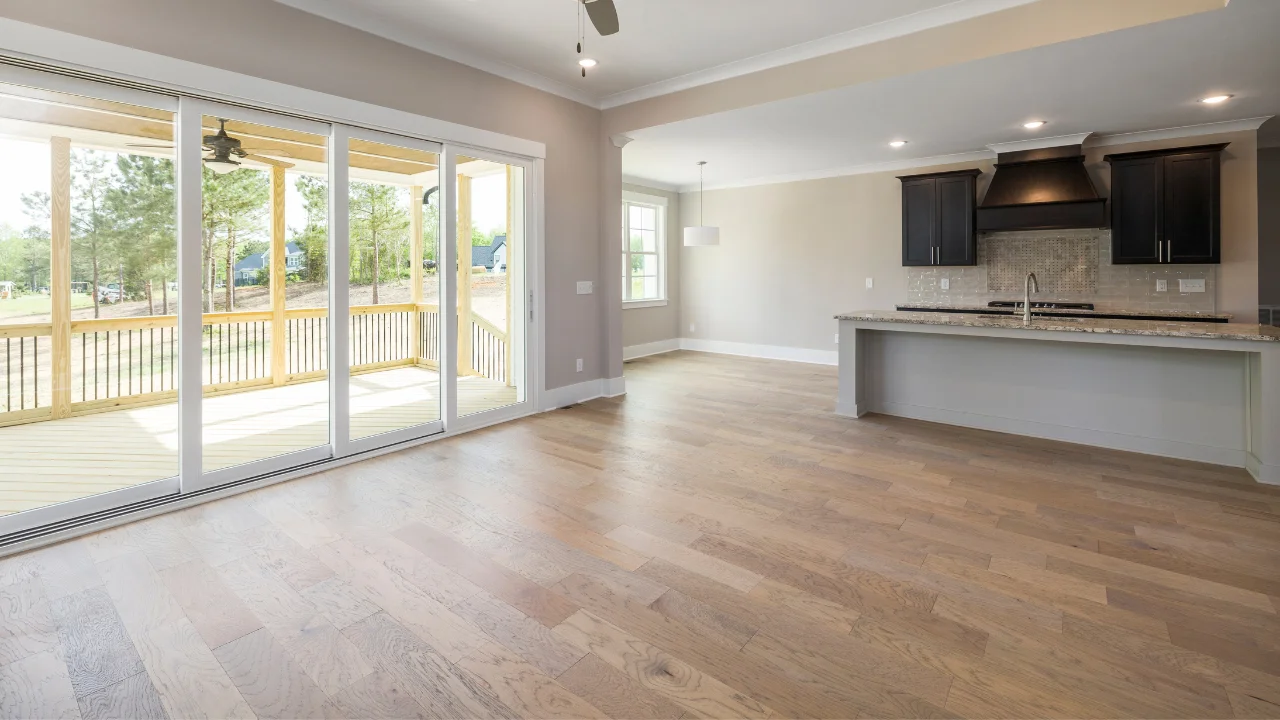
Luxury vinyl plank earns its reputation. It is waterproof, it shrugs off pets and spills, and it does not need refinishing. That reputation is also why it gets less care than any other floor in the house, and why some LVP floors look tired after a few years while others look new after ten.
The difference is rarely the product. It is grit, the wrong cleaner, and a couple of household items that are surprisingly hard on vinyl. Here is what actually protects it.
What wears an LVP floor out
Every LVP plank has a clear wear layer on top of the printed design. That layer is what takes the traffic, and once it is scratched through in a spot, the damage shows and cannot be polished out.
What scratches it is almost never the obvious things. It is fine grit: sand, dried mud, road salt, carried in on shoes and ground into the surface by every footstep. A floor kept free of grit wears remarkably slowly. A floor that is only mopped, over a layer of grit, is being sanded.
How thick that wear layer is, and so how much of this a given floor can take, is the single most important spec on an LVP quote. Wear layer and AC rating explained covers what the numbers mean.
The weekly routine
- Sweep, dust-mop or vacuum at least weekly, more often at entrances and in the kitchen. If you vacuum, turn off the beater bar or use a hard-floor head: a spinning brush roll flicks grit across the surface and can mark it.
- Damp-mop with a cleaner made for vinyl floors, or the one your floor’s manufacturer recommends. Damp, not wet: a well-wrung mop or a spray-and-mop system.
- Wipe spills when they happen. The plank is waterproof, but that is not a reason to leave liquid standing.
That is genuinely all a healthy LVP floor needs. Most of the problems below come from doing more than this with the wrong products.
What not to use
- Steam mops. Heat and pressurized moisture are not what vinyl or its seams are designed for, and many manufacturers exclude steam cleaning in their care instructions.
- Wax, polishes and shine restorers. LVP does not need wax, and these products build up into a cloudy film that holds dirt and eventually has to be stripped off.
- Oil soaps and oil-based cleaners. They leave a residue that dulls the surface and makes it slippery.
- Abrasive scrubbers, scouring powder and steel wool. They scratch the wear layer, which is the one thing you are trying to protect.
- Harsh solvents and undiluted bleach or ammonia. They can dull or discolor the surface.
The safest rule is to follow the care guide that came with your floor. Manufacturers differ on the details, and following their instructions is also a condition of most LVP warranties.
Waterproof planks, not waterproof floors
Rigid-core LVP planks are waterproof. The seams between them are not watertight. A spilled drink or a pet accident wiped up within the hour is a non-event. A leaking dishwasher, an overflowing tub or a water heater that fails while nobody is home is a different matter, because water that sits long enough works through the seams and reaches the subfloor underneath.
In basements, what is under the floor matters as much as the planks, which is why we test the slab and use a vapor barrier. Waterproof flooring for basements and mudrooms goes into that.
Rugs: check the backing
This is the one most people have never heard of. Rubber and latex rug backings can react with vinyl flooring and leave a permanent yellow or brown stain in the shape of the rug. It happens slowly, under the rug where nobody is looking, and it does not come out.
Use rugs and rug pads that the flooring manufacturer approves for vinyl, typically felt pads or pads labeled as safe for vinyl floors, and avoid rubber-backed mats on the inside of the door. Many LVP care guides call this out specifically.
Winter: salt, sand and the entry
Between November and March, most of the grit that reaches an LVP floor in this region arrives as road salt and sand on boots. It is abrasive, and salt dries into a white haze on the surface.
- A coarse mat outside each door to take the worst off.
- An absorbent mat inside, with a backing safe for vinyl.
- A boot tray, so wet boots stand in the tray rather than on the floor.
- Sweep the entry often in winter, and damp-mop salt haze with your normal vinyl cleaner rather than scrubbing it.
Furniture, chairs and appliances
LVP resists dents well, but a concentrated load on a small point still marks it, and dragged furniture scratches it.
- Felt pads on the feet of anything that moves: dining chairs, stools, tables. Check them a few times a year, because a felt pad that has collected grit becomes sandpaper.
- Soft, non-marking casters on office chairs, or a chair mat approved for vinyl floors.
- Wide furniture cups under heavy pieces with narrow legs.
- Lift, do not drag. When a refrigerator or range has to come out, run it over a sheet of hardboard or plywood rather than rolling it directly across the planks.
Let a floating floor float
Most LVP is installed as a floating floor. It is not fastened down, and it needs to expand and contract as one piece, which is why there is a gap hidden under the baseboard at every wall.
That has two practical consequences after installation. Do not screw or nail through the floor to anchor anything, such as a door stop, a cabinet or a bed frame. And do not pin it with heavy fixed items it was not designed to carry, like a run of cabinets installed on top of it after the fact.
The kitchen is where this comes up most. Kitchen flooring: under the cabinets or around them explains why cabinets go in before a floating floor, not on top of it.
Sunlight
Quality LVP has a UV-stable wear layer and resists fading far better than bargain product, but a floor in strong direct sun every afternoon for years can still change color. Window film or UV-filtering shades in rooms with heavy direct sun, and moving rugs occasionally so there is no sharp outline, keep the color even.
Pets
LVP is our first recommendation for houses with dogs, and the care is the same as above: wipe accidents promptly, keep claws trimmed, and put the water bowl on a mat safe for vinyl. Best flooring for pets and kids compares LVP with the other options.
When a plank is damaged
Scuffs and heel marks usually come off with the normal cleaner and a soft cloth. A deep gouge through the wear layer will not, and the fix is replacing the plank.
This is one of the real advantages of click-lock LVP. A plank near a wall can be reached by removing the baseboard and unclicking the rows back to it. A plank in the middle of a room can be cut out and a replacement set in without taking up the rest of the floor. Either way, the replacement plank needs to match, and printed designs and colors change between production runs.
That is why we recommend keeping a box of leftover planks from the original install, stored flat indoors. How much flooring to order explains why there is usually some left over to keep, and damaged floor planks: repair one board or redo the room? covers how a single plank gets replaced.
If you are comparing floors
If you have hardwood elsewhere in the house, its care rules are different, and several products that are fine on vinyl are wrong for wood. Cleaning hardwood floors without damaging them covers those. If you are still choosing, our luxury vinyl plank page covers the products we install and the wear layers we recommend, and every install includes our lifetime workmanship warranty. Book a free in-home estimate and we will bring samples to your house.