
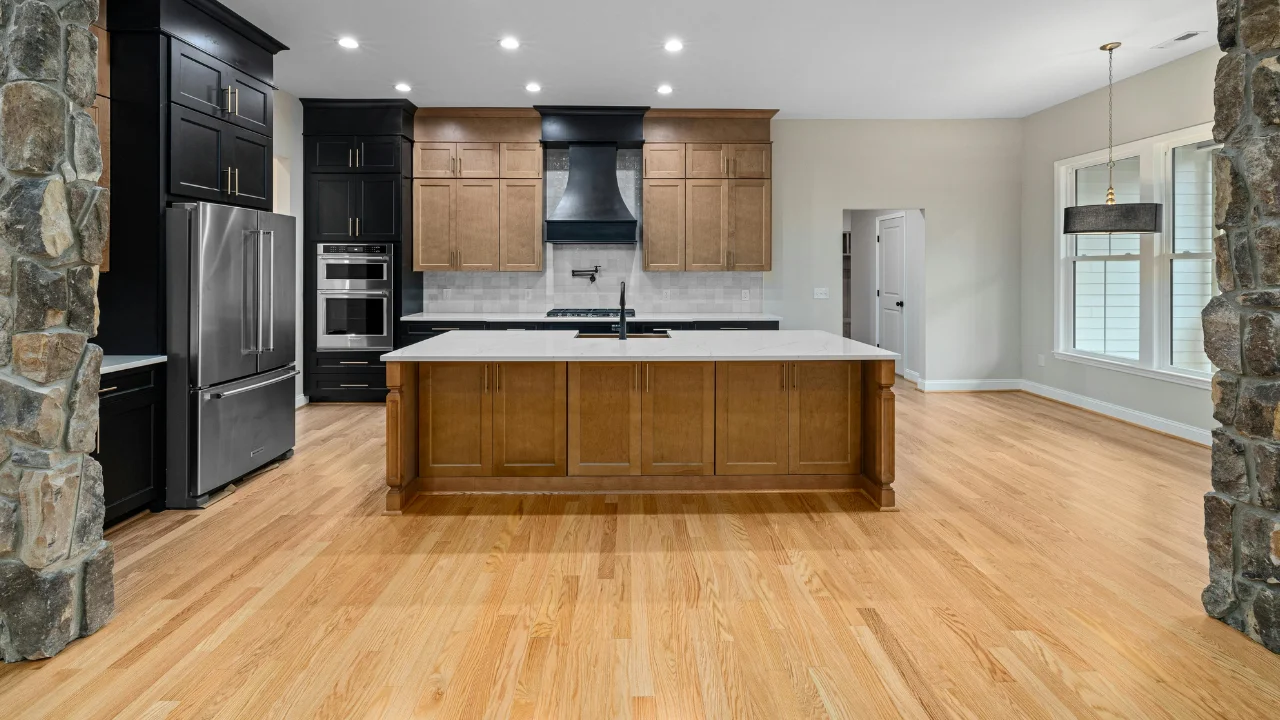
When we assess a dull or cupped hardwood floor around La Crosse, the cause is often the cleaning routine rather than the wear. Several products sold for floors are actively wrong for wood floors, and the damage builds slowly enough that nobody connects the two.
Never a steam mop
A hardwood floor is sealed on top but the seams between boards are not. Steam drives hot moisture into those seams under pressure, the board edges swell, and the floor cups — edges sitting proud of the middle.
Steam mops are excellent on tile and a reliable way to ruin hardwood slowly. By the time cupping is visible it has been happening for months. Damp, never wet: spray the cleaner onto the mop head rather than the floor, and wring it out.
What not to use
- Vinegar — acidic, and dulls a polyurethane finish over time.
- Dish soap — leaves a film that builds into a haze.
- Oil soaps — leave a residue that is hard to remove and that stops a new finish bonding if the floor is ever recoated.
- All-purpose sprays — many are alkaline enough to attack the finish.
The oil soap problem is the worst of them. We have had to strip floors before we could recoat them purely because years of oil soap left a residue no new finish would bond to, which turns a straightforward recoat into a far bigger job.
Winter is when floors take the most damage
Road salt and sand are abrasive and chemically unkind, and in a Wisconsin winter both arrive on every pair of boots. The grit acts like sandpaper underfoot, and salt left on a finish will dull it.
A mat at every entrance and a boot tray does more for a hardwood floor between November and March than any product on a shelf. Sweeping or vacuuming frequently matters far more than damp cleaning, because grit is what actually wears the finish.
Dry indoor air and seasonal gaps
Once the heating is on, indoor air here gets very dry, and wood gives up moisture and shrinks slightly. Thin gaps opening between boards in January and closing again by summer are the floor behaving exactly as wood does.
A humidifier through the heating season reduces how far the boards travel and how visible the gaps get. What does not help is filling seasonal gaps — filler pushed in during winter has nowhere to go when the boards expand again.
When cleaning is no longer the answer
If the floor is clean and still looks flat, the finish is worn rather than dirty. The test: run a fingernail across a mark. If it catches, the damage is into the wood and needs sanding. If it does not, a recoat restores the protective layer without touching the wood.
If a full sanding is where you land, what it is like to live through one covers the timeline and the cure schedule. Our refinishing guide covers the difference between a recoat and a full sanding, and our floor refinishing service covers what is involved.
Luxury vinyl plank has its own, simpler rules, and a few products that are wrong for wood are fine on vinyl, while some that seem harmless are not. How to clean and care for LVP covers them.