
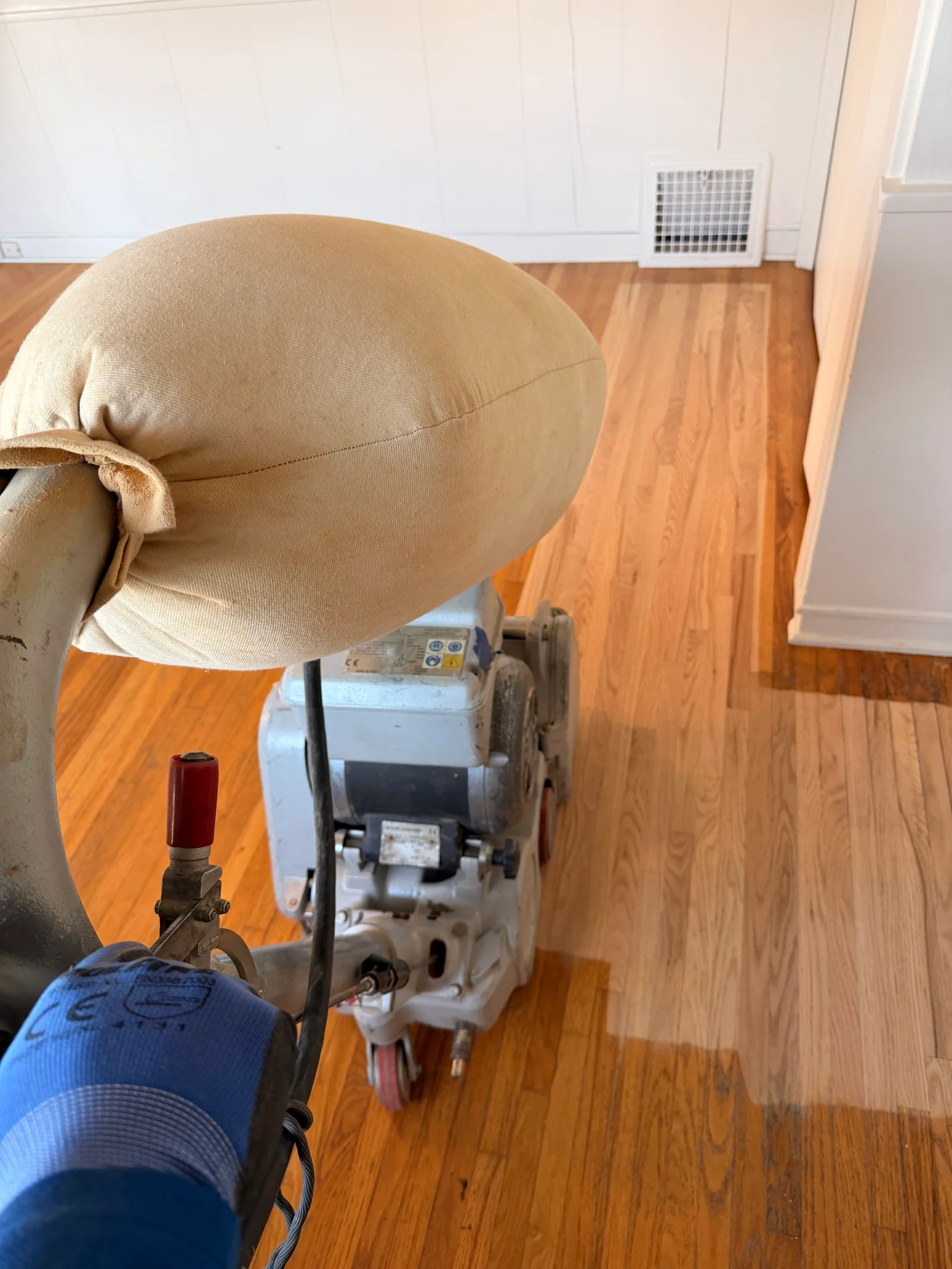
If your hardwood has gone dull, scratched, or gray at the edges, refinishing is almost always the smartest money you can spend on it. It brings back the wood you already own for a fraction of what new flooring costs, and it keeps the character that made the floor worth having in the first place.
The part most homeowners have never had explained is that there are two different jobs here, and confusing them is expensive.
Refinish and recoat are not the same thing
A full refinish sands the floor down to bare wood, removing the old finish and a thin layer of the wood along with it, then rebuilds the color and finish from scratch. It is the deep reset. Because it removes wood, a floor can only take so many across its life.
A screen and recoat is far gentler. The existing finish gets lightly abraded so a new coat bonds, then a fresh protective layer goes on top. No stain, no sanding to bare wood, no wood removed. It costs a fraction as much and takes a fraction of the time.
Here is the part that saves real money. The finish is a sacrificial layer protecting the wood. Recoat before the finish wears through, and you keep resetting that protection without ever sanding. Floors that wear out fast are the ones that never got recoated - the finish wore through, bare wood got dirty and scratched, and now only a full sand will fix it.
The water test tells you which
Put a few drops of water on a worn area and watch. If it beads up, the finish is still doing its job and you likely need a recoat at most, possibly nothing at all. If it soaks in or darkens the wood, the finish has worn through to bare wood and you need a full sand.
- Recoat when: the finish looks dull, hazy or lightly scuffed, water no longer beads, or the sheen is uneven in traffic paths but the wood is not exposed
- Full refinish when: bare wood shows through, there are deep scratches or dents reaching into the wood, there are gray or water-stained boards, or you want to change the color
One thing worth knowing: stain only soaks into bare wood, so any color change means a full sand underneath it. There is no way to recolor a floor without sanding it first.
Wisconsin seasons are hard on finishes
Our humidity swing between summer and a long dry heating season works wood harder than a stable climate does, and a worn finish lets that moisture movement reach the wood itself. Add road salt and grit tracked in from November through April - grit is genuinely abrasive and it is what wears finishes through in traffic paths - and staying ahead of wear matters more here than in a milder place.
The homeowners who spend the least on their floors over the long run are the ones who recoat on time and refinish rarely.
What the process involves
A full refinish starts with assessment - checking board thickness and looking for cupping, gaps, deep gouges and stains to confirm there is enough wood left to sand safely. Then sanding works through the grits in sequence, coarse first to strip the finish and level the surface, then progressively finer. Edges and corners get handled separately so the perimeter matches the field.
What the job is actually like to live around, including the dust, the odor and when furniture and rugs can come back, is covered in refinishing your floors while you live there. Dust gets pulled before anything goes down, because a clean floor is the only way to get a smooth top coat. If you are changing color, stain goes on next and gets tested on your actual floor in your actual light - color shifts dramatically between a sample and your living room. Then finish coats go down with buffing between them, and the floor cures. Light foot traffic is usually fine within a day; heavy furniture and rugs should wait several days.
Older Coulee Region homes often have wood worth saving
Some of the most satisfying work we do starts with pulling up carpet in an older home and finding original oak or fir underneath that nobody knew was there. Older Wisconsin homes were frequently built with wood better than what you can buy today, and once it is gone it cannot be bought back. If you are not sure what stage your floor is at, our floor refinishing page has more detail, or book a free in-home estimate and we will tell you honestly whether you need a full sand, a quick recoat, or nothing yet.