
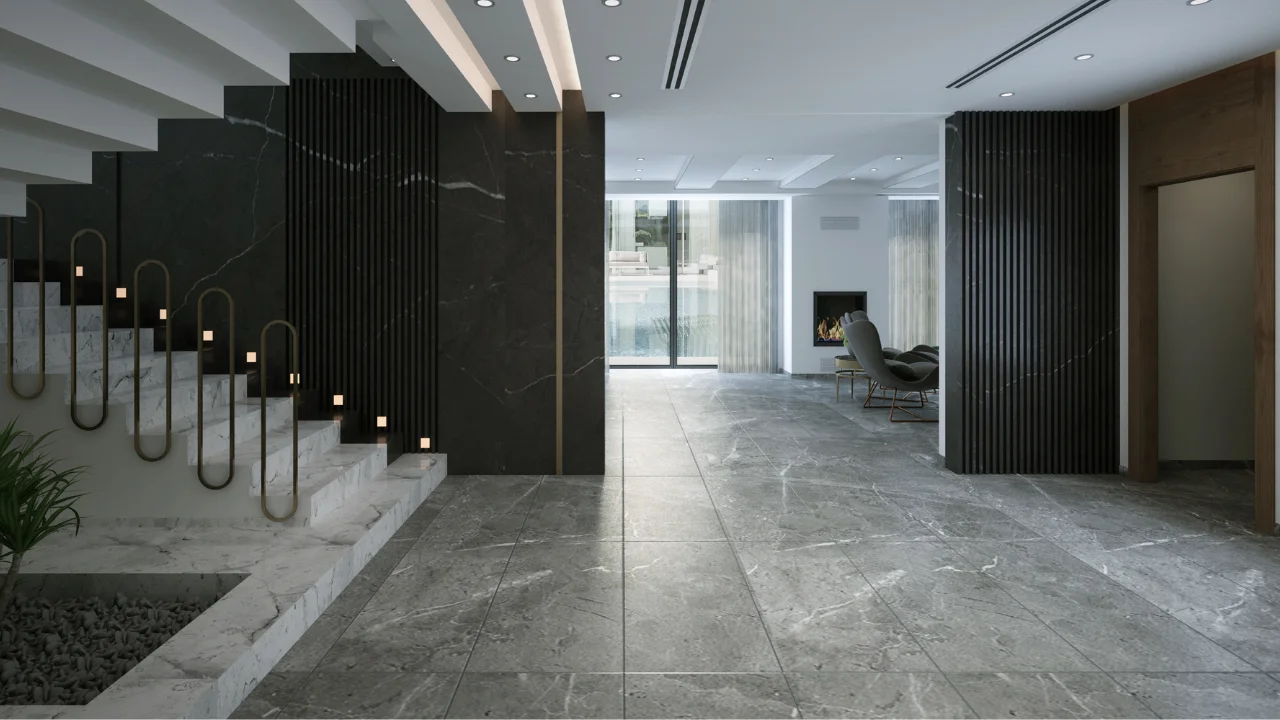
Tile is the oldest flooring material still in common use, and there is a reason it has lasted. Done properly, a tile floor outlives nearly everything else in the house. In a Wisconsin home it is clearly right in some rooms and clearly wrong in others.
Porcelain, ceramic and natural stone
Porcelain is made from denser clay fired hotter, which makes it harder and less porous than standard ceramic. It resists moisture, wear and chipping better, and much of it is colored through the body so a chip does not reveal a different shade underneath. For floors it is the workhorse.
Ceramic is softer and more porous, easier to cut and generally less expensive. Fine for walls, backsplashes and lower-traffic floors, but it shows wear sooner in a busy space.
Natural stone - slate, travertine, marble, granite - gives you genuine variation no printed product replicates. The trade-offs are real: stone is porous and needs sealing and periodic resealing, some varieties stain easily, and softer stones scratch and etch.
Where tile is the right call in a Wisconsin home
- Shower floors and surrounds - this is not a preference, it is the correct material, installed over a proper waterproofing membrane
- Bathrooms generally, where water is routine and the floor has to tolerate it indefinitely
- Entries and mudrooms, which take five months of melted snow, road salt and wet boots
- Laundry rooms, where an appliance failure is always possible
- Anywhere paired with in-floor radiant heat, since tile conducts heat better than any other flooring
The cold problem is real here
Tile conducts heat away from your feet. In Wisconsin that is the single most common complaint about tile floors, and it is worst in bathrooms where you are barefoot on a January morning.
There are two good answers. Radiant floor heating underneath solves it completely and turns the biggest drawback into the biggest luxury - it pairs better with tile than with any other flooring material, and if you are renovating down to the subfloor anyway, that is the moment to decide, because retrofitting later means pulling the floor up again. The alternative is accepting it in small rooms with bath mats and choosing something warmer elsewhere.
If the cold is what is stopping you but you want the look, luxury vinyl tile is worth considering - it gives a stone or ceramic appearance with vinyl warmth underfoot. Our luxury vinyl page covers it.
Grout is what ages a tile floor
The tile itself is nearly indestructible. Grout is where tile floors get tired. Unsealed grout absorbs stains and discolors over a few years into a shade nobody chose. Sealed grout does far better, and resealing periodically keeps it that way.
Grout color matters more than people expect. A light grout in an entry that takes winter salt and slush shows everything. A mid-tone hides life dramatically better. Narrower grout lines mean less grout to maintain, which is part of why large-format tile has become popular.
Cleaning, sealing, color-sealing and regrouting are covered step by step in tile and grout care.
Slip resistance in a snow climate
This matters more in Wisconsin than in most places. A polished tile that looks stunning dry can be genuinely hazardous with wet boots on it, and an entry floor is wet for months. Textured surfaces and smaller formats with more grout lines both provide better grip, and it is worth asking about slip rating specifically for entries and bathrooms.
Installation is unforgiving of movement
Most of the tile we set is in bathrooms, and the full sequence of a bathroom remodel, from demolition through waterproofing to trim, is in bathroom remodel in La Crosse: the order of work.
Tile is rigid and does not tolerate a floor that flexes. A subfloor that moves underfoot will crack tiles and crack grout, and no quality of tile prevents it. Over a wood subfloor that usually means backer board or an appropriate underlayment, and sometimes structural reinforcement. In wet areas it means a waterproofing membrane. Tile also has to be set in mortar and cured before grouting, and grouted before sealing, so plan for the room to be out of service for several days. See our tile and stone page, or book a free in-home estimate and we will tell you where tile belongs in your house and where something else serves you better.