
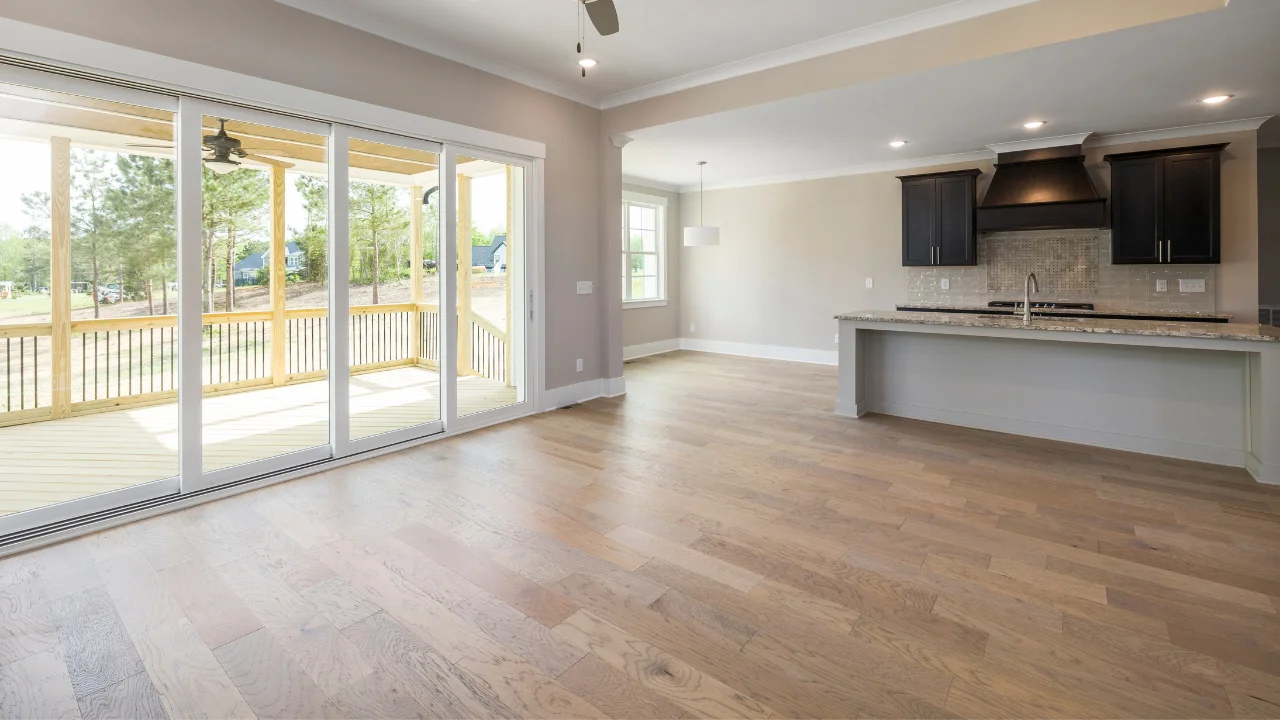
Hardwood, luxury vinyl plank (LVP), and laminate can all read as wood from across the room, but they behave very differently underfoot, in water, and over time. The right choice is rarely about which is "best" - it is about which fits the specific room and how you live in it.
Hardwood: the long-term floor
Solid hardwood is the longest-lasting floor money can buy. It adds resale value, ages with character, and can be sanded and refinished multiple times across its life. The trade-offs are price and water sensitivity - it belongs above grade, in stable indoor climates, in main living spaces of homes you plan to keep. It is not the answer for a wet basement.
LVP: the waterproof workhorse
Rigid-core luxury vinyl plank is waterproof, dent-resistant, and the right call for basements, kitchens, mudrooms, lake homes, and rentals. It costs less per square foot than hardwood and shrugs off the spills, pets, and moisture that real wood cannot handle. It will not match hardwood for resale value, but for durability and water resistance nothing beats it.
Laminate: the wood look on a budget
Modern laminate delivers a convincing wood look at roughly half the installed cost of hardwood, and a quality 12mm board feels substantial underfoot. It is water-resistant, not waterproof, so it shines in dry rooms - bedrooms, dens, second floors, and rental units - and should stay out of full bathrooms and basements with moisture.
A quick way to decide
- Main-floor living space, staying long-term, want resale value: hardwood.
- Basement, kitchen, lake home, rental, pets and kids: LVP.
- Bedroom, den, or second floor on a budget: laminate.
- Already have solid hardwood that looks tired: refinish before you replace.
Once the material is settled, the specification decides how long it lasts, and wear layer and AC rating covers the one number to ask for on each of the three. If the room does not fit neatly into one bucket - and plenty do not - that is exactly the conversation we have on an in-home estimate. We will tell you when a cheaper floor is the smarter call, because the honest recommendation is what earns the next project.