
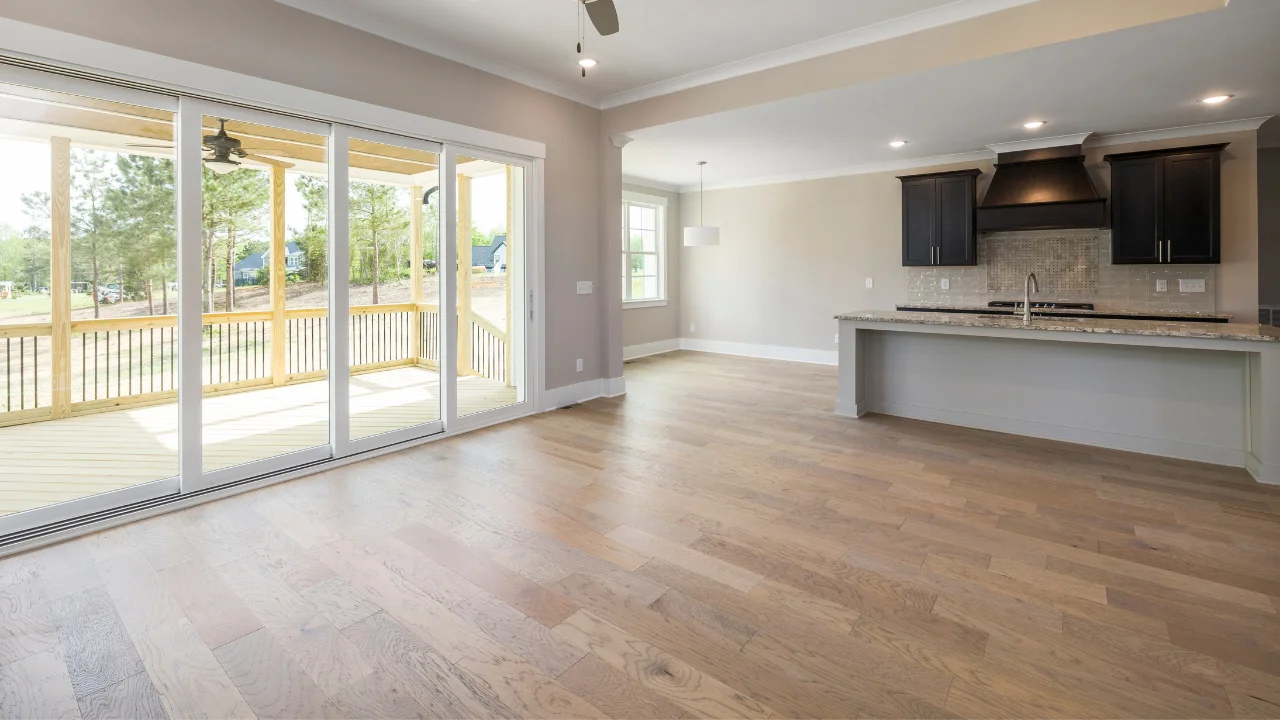
Most of what we install is in houses. But a steady share of our work is light commercial, and the requests come from a recognizable list: a professional suite in downtown La Crosse, a salon on the Onalaska strip, a clinic waiting room, a taproom, a retail unit a landlord is turning over between tenants, a storefront in a Winona building older than the state of Minnesota. The spaces are different. What they need from a floor is more alike than people expect, and it is not what a residential floor needs.
This is a plain guide to commercial flooring in the Coulee Region: what changes, what product suits which space, and how the job is run so you can stay open.
What is different about a commercial floor
- Traffic. A busy retail floor sees more footsteps in a month than a living room sees in a decade, and most of them are in a few paths. The wear layer has to be specified for that, not for a household.
- Cleaning. Commercial floors are mopped daily with stronger chemicals and sometimes machine-scrubbed. Finishes and seams that survive a home do not always survive that.
- The subfloor is usually concrete. Slabs hold moisture, and moisture is the number one cause of commercial floor failure. It gets tested before anything is laid.
- Downtime costs money. A house can wait a day. A restaurant cannot. Scheduling is part of the specification.
- Slip resistance, seams and cove base matter in wet and regulated spaces in a way they never do in a bedroom.
The product categories are the same ones on our residential pages, but the grades are not. Commercial-grade luxury vinyl tile and plank carries a 28 mil or heavier wear layer against the 12 to 20 mil common in homes. Commercial laminate is rated AC5. We explained what those numbers measure in wear layer and AC rating, and they matter more here than anywhere.
Offices and professional suites
The two products that dominate office work are carpet tile and commercial LVT, often together. Carpet tile in open work areas and private offices, because it is quiet, it is warm, and when a chair mat wears through or coffee lands, you replace the tiles rather than re-carpet the room. LVT in the entry, the corridors, the kitchenette and anywhere a rolling chair or a wet boot lives.
The office-specific detail is the subfloor. Many La Crosse professional suites are in older buildings with raised access floors, old adhesive residue or a slab that was never flat, and the prep is the difference between carpet tiles that lie flat and ones that curl in a year.
Retail, showrooms and boutiques
Retail floors are about look and about traffic paths. Commercial LVT in a wood or stone visual is the default because it delivers the look at a wear layer that survives the front door, and it can be laid in patterns and borders to define departments. Where the budget allows, tile at the entry takes the worst of the salt and grit in winter.
The retail-specific question is turnover. A landlord fitting out a unit between tenants wants a floor that suits the next three tenants, not just this one. A neutral commercial LVT does that. A floor chosen for one tenant’s brand colors does not.
Salons, barbershops and spas
Salon floors deal with hair color, bleach, water, rolling stools and constant sweeping. The requirements are chemical resistance and a surface that can be cleaned to the corner without seams that hold dye. Commercial LVT works well in the styling area; sheet vinyl with heat-welded seams is the better answer around shampoo stations where water and chemicals meet. Chair mats under every styling chair are not optional, and we will tell you which products tolerate the casters without them.
Clinics, dental and medical
This is where seams decide the product. Clinic floors are cleaned with disinfectants that would strip a residential finish, and the floor has to be cleanable to the wall. Sheet vinyl with heat-welded seams and a coved, integral base is the standard in treatment rooms and back-of-house, because there is nowhere for anything to collect. Waiting rooms can take commercial LVT or carpet tile. We work to the specification the practice requires rather than substituting a residential product that looks similar.
Restaurants, cafes and taprooms
Front of house and back of house are two different floors. In the dining room, commercial LVT or tile handles the traffic, the spills and the chair legs. Behind the line, in the kitchen, the dish area and the walk-in corridor, the floor has to shed grease and hot water and survive being hosed down. That is a coating or a quarry tile job rather than a plank job.
Our epoxy and concrete coatings service covers the back-of-house floors, workshop areas and utility rooms in commercial spaces, and epoxy or polyaspartic explains the system that goes onto a commercial slab and why the preparation is the entire job.
The slab
Almost every commercial floor in the region sits on concrete, and concrete carries moisture. Moisture moving up through a slab will push a glued floor off from underneath, cup a plank, and grow what you do not want under a carpet tile. The number of failed commercial floors we have been called to look at that were installed without a moisture test is most of them.
So the slab is tested before anything is specified, and where it reads high the answer is a moisture mitigation layer under the floor, not a different plank. The test is quick, it is part of the estimate, and it is the reason our commercial floors stay down.
Older buildings add old adhesive and old floors. Downtown La Crosse and the historic blocks of Winona have wood subfloors under some ground-floor commercial units and decades of previous flooring on top of them. We look at what is actually there before pricing, because a slab that needs grinding and a wood subfloor that needs leveling are different jobs from a clean new-build floor in an Onalaska strip.
Installing around your hours
A commercial floor is scheduled, not just installed. Evenings, weekends and phased installation are how a business stays open: one half of a retail floor one night, the other half the next; a clinic done treatment room by treatment room; a restaurant dining room done between the last seating on Sunday and the first on Tuesday. Material lead time is the other half of the schedule, and custom-order product carries its own, so the order goes in before the date is set.
We quote commercial work as a fixed, itemized price with the moisture test result, the prep, the product specification and the schedule written into it, so the number you see is the number you sign and the date you are told is the date you reopen.
What we do not do
Heavy industrial and warehouse floors under forklift traffic are a specialist concrete job and we will say so. Structural slab repair is a separate trade. And custom-order material on a same-week turnaround is not something anyone can honestly promise. Light commercial, done properly, around your hours, is what we do.
Where we work
We install commercial floors across the Coulee Region on both sides of the river: La Crosse, Onalaska, Holmen, West Salem and Winona, along with the smaller communities around them such as Goodview and Barre Mills. The full specification is on our commercial flooring page. A free on-site estimate starts with the slab test and a conversation about your hours.